
Rauschenberg at 100: Life Can’t Be Stopped in NYC
At the Guggenheim in New York, Robert Rauschenberg’s wild mix of images, materials, and ideas is back in motion for his centennial. This focused show asks how art – like life – ever really stands still.
Date: 10. October 2025 – 3. May 2026
Venue: Solomon R. Guggenheim Museum, New York
If you’re in New York City between Oct 10, 2025 and May 3, 2026, the Solomon R. Guggenheim Museum is the place to see Robert Rauschenberg: Life Can’t Be Stopped. This centennial exhibition gathers more than a dozen pivotal works from the museum’s own holdings, joined by key loans from the Robert Rauschenberg Foundation, to celebrate what would have been the artist’s 100th birthday.
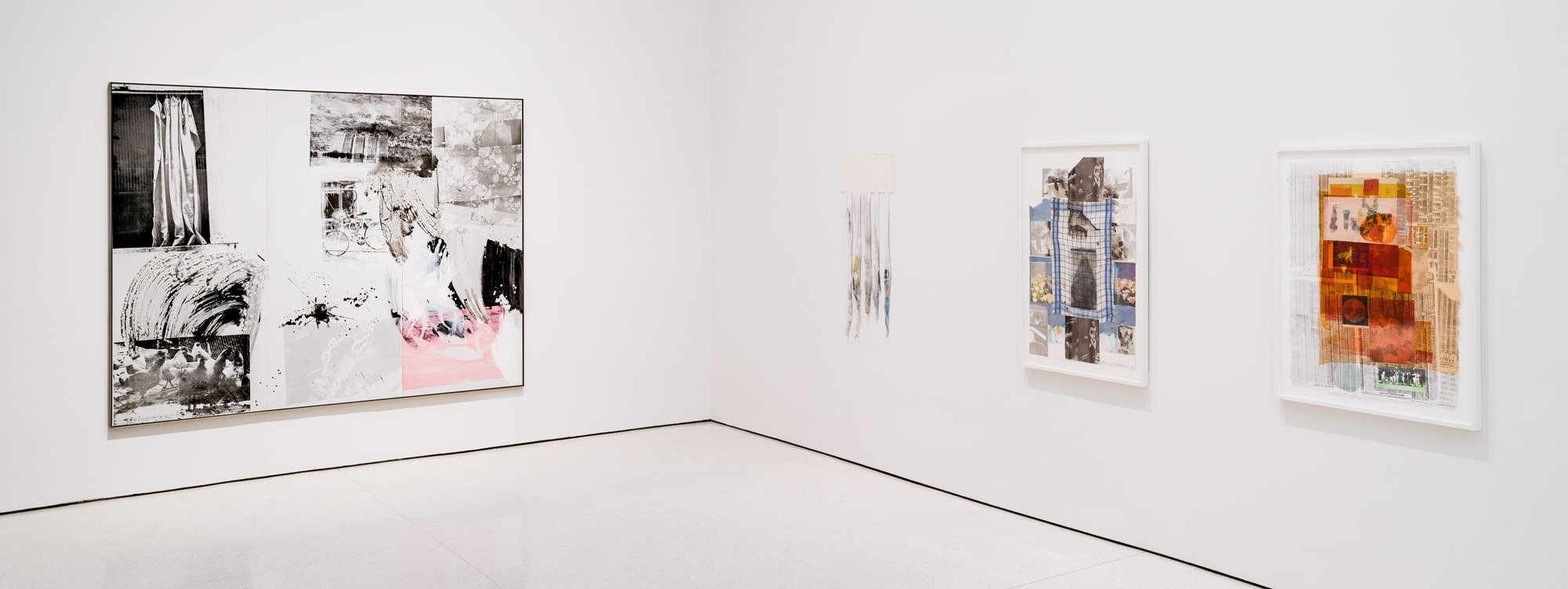
Collages on display in “Robert Rauschenberg: Life Can’t Be Stopped,” at the Guggenheim Museum, in New York. Photo by Ariel Ione Williams, © Solomon R. Guggenheim Foundation, New York
The show is part of a global Rauschenberg year, but it feels particularly at home in the Guggenheim’s spiralling architecture, where the artist has a long history—from early Pop-art shows in the 1960s to his landmark 1997–98 retrospective. Here, the focus is deliberately tight: how Rauschenberg used photographic images, commercial printing processes, and everyday material to collapse the gap between art and life.
At the heart of the exhibition is Barge (1962–63), a 32‑foot‑long silkscreen painting that reads like a horizontal rush of mid‑century life—rockets, cityscapes, road signs, flashes of news photography. Completed largely in a single 24‑hour burst, it is the largest work from his Silkscreen Paintings series and returns to New York for the first time in nearly 25 years. Nearby, works such as Untitled (1963) and Untitled (Red Painting) (ca. 1953–54) trace the arc from dense, hand‑worked surfaces to vivid layers of printed imagery, revealing an artist constantly rethinking how pictures can behave in space.
Rauschenberg famously wanted his paintings to be “reflections of life,” and he treated life as something messy, collaborative, and in motion. His experiments with transfer drawings, silkscreen, and collage were never just technical games; they were ways of acknowledging television, advertising, newspapers, dance, friendship and politics as part of the same visual field. For today’s emerging artists—many of whom also scavenge images, blur disciplines and work collectively—Rauschenberg’s practice feels less like history and more like an open invitation.
Life Can’t Be Stopped makes a compelling case for Rauschenberg as a key ancestor of contemporary image culture, but also as a model for artistic generosity and curiosity. If you’re in New York over the coming months, this compact, high-impact show is well worth adding to your museum list. And if you’re browsing from afar, head to ARTPIQ to discover emerging artists who are still pushing, remixing, and renewing the space between art and everyday life.
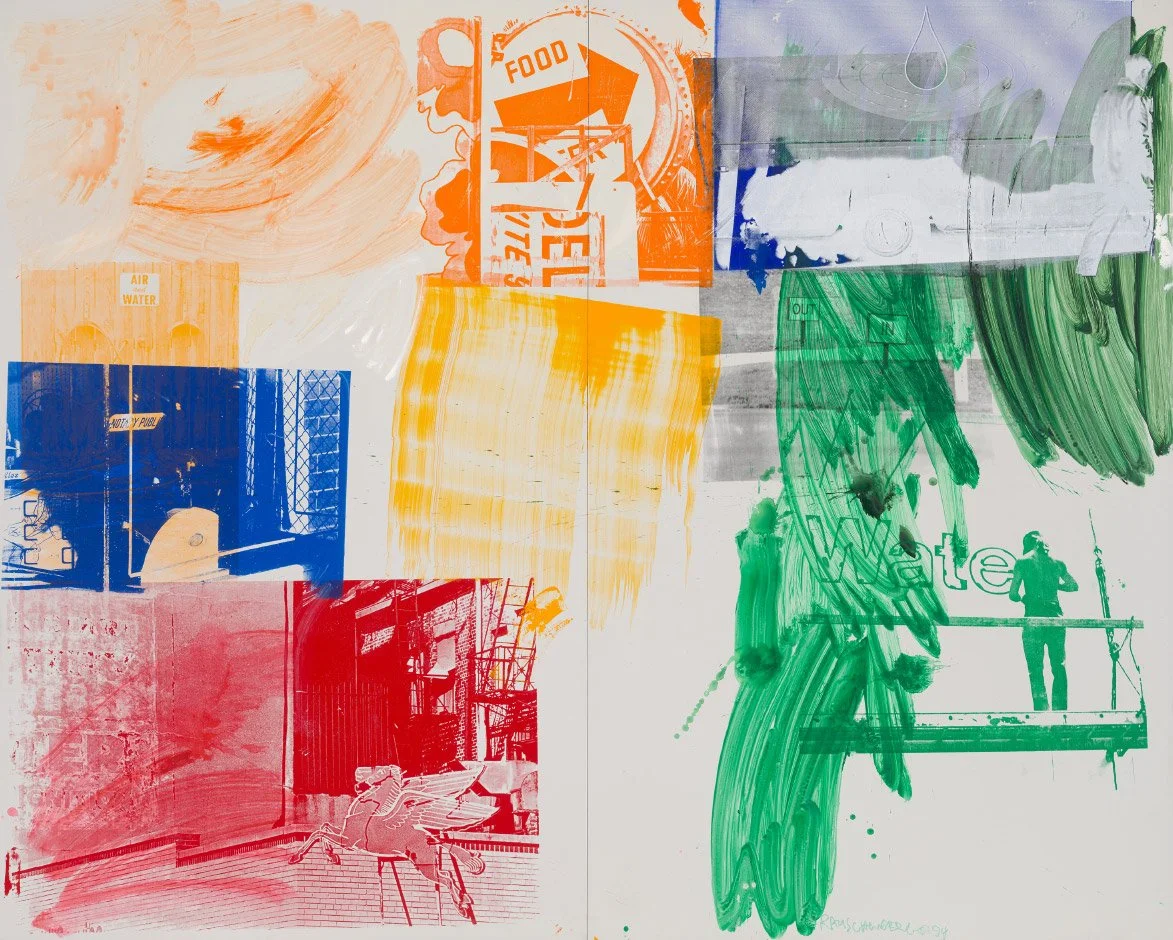
Wet Flirt (Urban Bourbon), 1994, by Robert Rauschenberg. Photo © Robert Rauschenberg Foundation
You may also want to read


Created during a period of solitude in Mallorca, The Garden marks a quiet yet profound shift in Nis Namdar’s practice. In this conversation, she reflects on stillness, the presence of animals, and a more attentive way of seeing — one that gently repositions what it means to be human.