
Investing into Emerging artists: a collector’s guide
Want to collect smarter without turning art into a spreadsheet? Here’s how to spot emerging talent—and build a watchlist that’s exciting to live with.
Searching for emerging artists to invest in can feel like walking into a fair with 200 booths and no map. The good news: you don’t need insider access (or a six-figure budget) to start building a strong, future-facing collection. You just need a few reliable signals—and a mindset shift: the best “investment” is often the one you’re genuinely happy to live with.
First, a quick reality check. Art isn’t a savings account, and nothing is guaranteed. But emerging art can be a uniquely satisfying category because the upside is twofold: you support a living artist early, and if their career accelerates, the value of your work may rise with it. In other words: it can look incredible on your wall and become a meaningful asset over time.
So what should you look for? Here are five collector-friendly signals that often show up before an artist becomes widely visible in the market (think: the names you start seeing across respected magazines, fairs, and institutional group shows):
A distinct visual language (not just a trend). Strong emerging artists aren’t only “good at painting”—they build a world: recurring symbols, materials, or questions that make the work recognisable in a room.
Consistency + evolution. Look for a coherent body of work, plus signs of growth. If everything feels like a one-off style experiment, it’s harder for the market (and museums) to follow.
Context and credibility. Exhibitions, residencies, prizes, and serious curatorial platforms matter. You’re tracking career momentum—not popularity.
Thoughtful scarcity. Emerging artists often work in editions, works on paper, small paintings, or textiles. Limited output (or carefully managed editions) can support long-term value better than constant overproduction.
A support system. A gallery relationship, repeated curatorial interest, and collector follow-through are “invisible infrastructure.” It’s not about hype—it’s about whether someone is building the artist’s career with care.


Now, a strategy that works well at the Top-of-funnel stage: build a two-speed watchlist.
The “headline” references (confidence builders)
These are breakout or fast-rising artists you may have already encountered via major fairs, museum programming, and art media. They’re useful because they teach your eye: you start noticing what “strong” looks like—composition, material confidence, and a clear point of view.The “quiet discoveries” (where emerging collectors can move early)
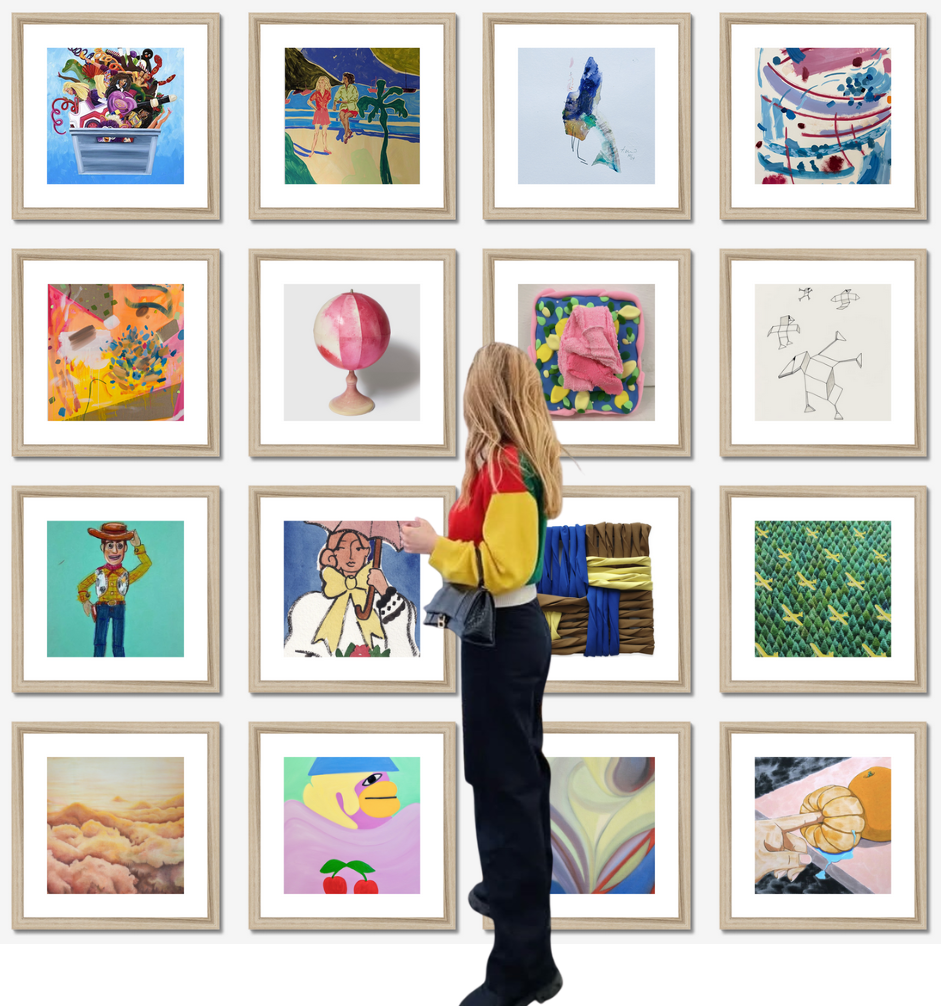
This is where platforms like ARTPIQ are valuable: curated access to artists who are not yet everywhere, but already making compelling work. To make this concrete, here’s what a balanced entry-level mix can look like in practice:
A limited edition print or small work on paper (often the most approachable starting point).
One “statement” piece you truly want to live with (even if it’s the biggest stretch).
A repeat purchase from an artist whose practice you’re following (collectors often underestimate the power of buying thoughtfully, more than once).
If you’re collecting across DACH, Europe, and the USA, you can also widen your lens without widening your budget:
Follow academy graduate shows and local curatorial spaces (Berlin, Vienna, Zürich, Munich—plus New York, LA, London, Paris).
Pay attention to regional fairs and satellite events where galleries take risks and introduce new names.
Build a simple habit: each month, save 10 works you love, then review your saves. Patterns reveal your taste—and your next smart step.
A final filter that’s surprisingly effective: if you’d be proud to hang the work even if prices never change, you’re already collecting well. And if the artist’s career grows, you’ll be glad you started early.
Ready to start your watchlist? Head to ARTPIQ and explore works that fit your space, taste, and comfort zone.
You may also want to read
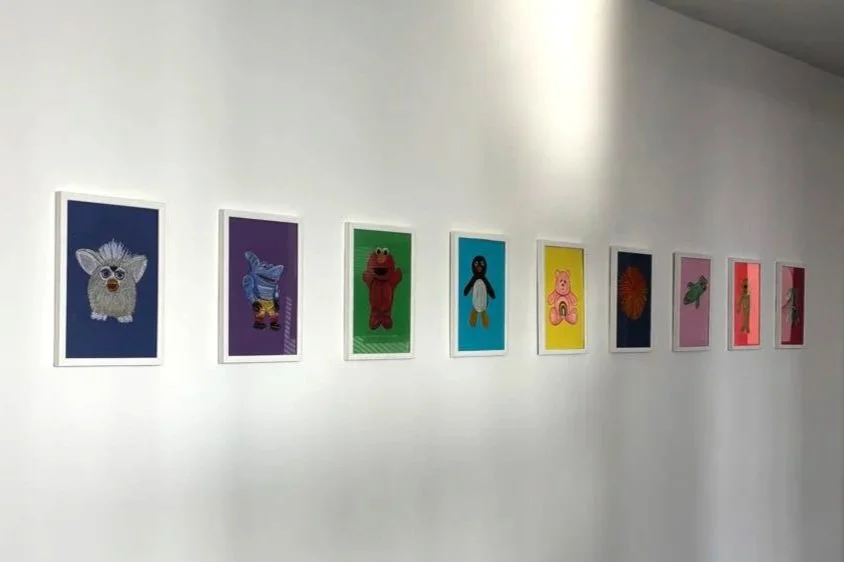


Created during a period of solitude in Mallorca, The Garden marks a quiet yet profound shift in Nis Namdar’s practice. In this conversation, she reflects on stillness, the presence of animals, and a more attentive way of seeing — one that gently repositions what it means to be human.